 By Gilbert Falso :: 12:29 AM
Paypal has filed a lawsuit against Google and two Google employees, Osama Bedier and Stephanie Tilenius, who were former PayPal employees.
The lawsuit comes right as Google unveiled their new payment application, dubbed ‘GoogleWallet’ that allows shoppers to use their mobile phones as a payment device. However, the application is still in beta test mode, and will not be available to the general public until this summer.
In a statement on their website, PayPal says, “We spend a lot of time and energy creating the things that make PayPal unique and a preferred way to pay for almost 100 million people around the world. We treat PayPal’s “secrets†seriously, and take it personally when someone else doesn’t. So we made a decision today. We filed a lawsuit against Google and two former colleagues who now work there.”
The lawsuit, filed in California’s Santa Clara County Superior Court, alleges that Bedier, a former PayPal executive working on the company’s mobile platform, misappropriated PayPal’s trade secrets when he left to go to work for Google earlier this year.
“Bedier and Google have misappropriated PayPal trade secrets by disclosing them within Google and to major retailers,” reads the lawsuit, available here as a PDF.
The lawsuit, which also lists Tilenius and 50 other unidentified individuals as defendants, seeks unspecified compensatory and punitive damages, and restitution and royalties as well.
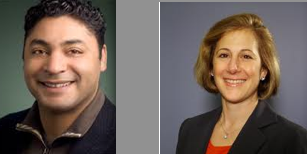 Former PayPal employees Osama Bedier and Stephanie Tilenius
PayPal claims that they had worked closely together with Google for three years on developing a commercial platform where PayPal would serve as the payment option for mobile application purchases on Google’s Android phones.
PayPal asserts that Bedier was their senior executive leading and finalizing negotiations with Google during this period, and that he had been logged transferring documents outlining PayPal’s mobile payment strategies to a non-PayPal laptop just a few days before leaving PayPal for Google.
“By hiring Bedier, with his trade secret knowledge of PayPal’s plans . . . Google bought the most comprehensive and sophisticated critique of its own problems available,” the suit says.
Google has not yet responded to the lawsuit.
 By John Rossi :: 7:59 AM
The Walt Disney Company has acquired three children’s social networking sites within the past few days.
Moving away from developing console video games and investing more in social and mobile companies, Disney has purchased Playdom, a social gaming company, for $563 million, Togetherville, a children’s social network, and Tapulous, a mobile music game company.
Togetherville is a social network geared for children between the ages of 6 and 10, and allows children to interact with the children of their parents’ friends on Facebook. Through pre-selected messages, games, and movies, kids can navigate the site in a fashion very similar to Facebook, and parents are allowed to see the shared material first.
While the company did not disclose the details of the Togetherville deal, including the amount they paid, or how many members Togetherville has, this shift in Disney’s online and games philosophy is a sign of its growing interest in the social media and gaming.
 By Gilbert Falso :: 5:49 AM
In June of 2009, the city of Bozeman, Montana was in the news for requiring people who applied for civil service jobs with the city to hand over their social networking usernames and passwords, so that hiring managers could log in and look at their accounts. After much public ridicule and bad press, the city removed this requirement, and tried to pass the whole idea off as a mistake or misunderstanding.
History is now repeating itself in Maryland.
The ACLU has taken on the case of a Maryland man who applied for a job with the Maryland Department of Corrections, after he had taken a brief leave of absence. As a part of his interview process, he was asked to reveal his Facebook username and password.
The Maryland Department of Corrections is now requiring all account information, including passwords, as a part of their background check screening process. The man re-applying for his job was told not to change his password for a few months.
The ACLU has sent a letter to the Corrections Department calling the policy “a frightening and illegal invasion of privacy,” as well as a clear violation of the Stored Communications Act. The ACLU demanded that the department rescind the policy.
Maryland Corrections officials have not yet responded to the ACLU’s letter, and it is likely that the organization will take the department to court over the matter.
 By Gilbert Falso :: 6:25 PM
Cornell researchers have been awarded an $800,000 grant to work to improve group interactions in online social networks. The work is collaborative, between Cornell and Google researchers, and spans an interdisciplinary group, including economists, sociologists and computer scientists.
The goal of the research is to better understand the social and economic factors behind online social networks and the plan is to apply what the researchers learn to make such groups run more smoothly.
One of the challenges with today’s social networks is that most systems only create links between people, but lack important levels of detail within those links, according to Jon Kleinberg, a professor of Computer Science and principal investigator at Cornell. The systems do not provide natural ways to show the attitudes that people have toward each other, or the roles that various individuals play in a particular person’s life.
“Current representations of online social networks are not able to capture the full richness of social interaction in users’ real lives,” Kleinberg said in a Cornell press release.
The researchers also hope to discover ways to shape the architecture of social networks to make them less likely to fall into social disorder and to encourage users to produce more useful content.
The Cornell research team includes economists David Easley and Larry Blume; computer scientists Éva Tardos, Lillian Lee, Robert Kleinberg and Dan Huttenlocher; information scientist Dan Cosley; communication professor Geri Gay; and sociologist Michael Macy.
 By John Rossi :: 3:24 PM
An Egyptian man named his newborn baby girl “Facebook” in the aftermath of the nearly three weeks of protests that used social media as an tool to organize people and overthrow the government in that country..
According to Egyptian news outlet Al-Ahram, Gamal Ibrahimhas named his first daughter Facebook as a way to honor and recognize the role that the social website had in Egypt’s recent revolution.
Despite limited access to the Internet, Facebook and other social media sites, Like YouTube and Twitter, were used by protest organizers beginning with the major revolt on January 25th. The words “Facebook” and “Twitter” could be seen printed on signs and painted on walls and other public areas throughout the demonstrations.
A translation of the Al-Ahram report provided by TechCrunch reads, “The girl’s family, friends and neighbors in the Ibrahimya region gathered around the new born to express their continuing support for the revolution that started on Facebook. ‘Facebook’ received many gifts from the youth who were overjoyed by her arrival and the new name.”