By Paul Thomson :: 5:05 PM
 GitHub, the online code-sharing platform website has accidentally leaked the e-mail addresses of thousands of its enterprise-level customers.
In a glitch discovered when the company sent e-mail reminders to customers about their accounts, e-mail addresses for all enterprise customers were included in the “To:” field of the message. This resulted in recipients being able to view all of the names and companies on the mailing list.
The company quickly realized the error, and stopped the batch transaction that was sending the message. The following statement was released:
This morning a routine email was accidentally sent to many of our GitHub Enterprise customers. In these errant emails, customer email addresses were included in the To: field, making them visible to anyone who received the message.
We have stopped the remaining messages in the email batch from being sent, and are investigating how this happened.
We are very sorry that your email address was accidentally shared. Your GitHub Enterprise installation is unaffected, and no license keys or any other data were exposed during this incident.
We are investigating the root cause of this email issue and will update our blog with our findings.
Again, we are very sorry this happened. Your privacy is very important to us and we will be making changes to ensure that this does not happen again.
Although the company acted quickly to mitigate the damage, at least one of the e-mail recipients has posted the entire mailing list contents to the PasteBin website, where anyone can comb through it to discover what companies and individuals depend on the enterprise level of GitHub for their code management needs. Not necessarily information that many companies would like to see as public information.
By Cynthia Herbert :: 4:54 PM
 Google today announced that they would roll out a new filter in Google Image Search to filter for animated GIF images.
The animated GIF has increased in popularity over the past couple of years, and this new functionality will likely be well received, especially by users of Tumblr blogs!
The company posted these instructions: “Starting today, there’s an easier way to unearth those gems: when you do an image search, click on “Search tools†below the search box, then select “Animated†under the “Any type†dropdown box.
In addition to animated GIF earch filter, Google has also added the ability to find images with transparent backgrounds via an option marked “Transparentâ€Â under the “any color†dropdown box on “Search Tools.”
Although Google announced the availability of the technology today, it appears they are rolling it out in stages, as not all users are seeing options for animated GIFs or transparent images in their Google Image Search tools settings.
By Paul Thomson :: 2:31 PM
 Samsung, not content to just compete with Apple in the smartphone category, looks also to be competing in the wearable device category as well, with plans to release a wearable smart watch in the near future.
Just as the launch last week of the Galaxy 4S is aimed to compete with Apple’s iPhone 5, the new Samsung smart wristwatch is squarely aimed to compete with Apple’s coming iWatch product.
In a statement to Bloomberg news, Samsung’s executive vice president of mobile business Lee Young Hee said, “we’ve been preparing the watch product for so long. We are working very hard to get ready for it. We are preparing products for the future, and the watch is definitely one of them.â€
Hee did not go into details on the smart watch, or provide a timetable for release. Samsung is the first of the two companies to make a public comment about work towards a new smart watch. Apple has not said anything formally, but reports published earlier this year claim that the company has around 100 employees working on the iWatch product. Apple plans to begin selling its watch sometime later this year.
One area where Samsung may be competitive over Apple on the watch front is on price. The Bloomberg report notes that Samsung may be able to market a less expensive watch because it produces its own chips and LCD screens, unlike Apple who must rely on third-party manufacturers.
By Cynthia Herbert :: 9:45 AM
 The hits just keep on coming this month for Electronic Arts (EA). First the miserable launch of the SimCity game, which needs to be tethered to servers on the back-end to function properly, and now, news that EA’s online game store, Origin, is at risk for a hack attack that swaps out good game code for malicious code.
The Origin store acts as an online distribution system, where users can buy, download and manage their EAÂ games as well as use forums and chat rooms to interact with other fans and players.
Researchers at a an online security company were able to exploit a loophole in the way that the online store provides links to games that users have downloaded and installed on their own machines. The loophole allows for hackers to enable the downloaded game to run code that compromises users machines.
However, there is no evidence yet that the loophole has yet been exploited by hackers. EA is said to be looking into the issue with Origin.
“An attacker can craft a malicious internet link to execute malicious code remotely on victim’s system, which has Origin installed,” the researchers in a paper that outlined their work.
For the hack attack to be successful, attackers must first need to have some identifying information about their target player account to fully exploit the vulnerability. This was not difficult, claimed the researchers, because Origin does not prevent repeated attempts to guess login or password information.
By Gilbert Falso :: 9:09 AM
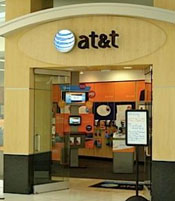 Wireless carrier AT&T yesterday announced new tiers and pricing for its shared data plans for smartphones and mobile devices. Hold on to your wallet, though – these plans are pricey.
The company has rolled out three new data packages aimed toward heavy mobile data consumers. All of these plans fall under the umbrella of AT&T’s Mobile Shared data packages. The new data plans offer bandwidth in allotments of 30, 40, and 50 GB chunks.
The 30 GB plan costs $300 per month, the 40 GB plan $400, and the 50 GB plan tops off at – you guessed it – $500. One silver lining to these outrageous prices – they also include unlimited talk and texting. Little consolation, for sure.
In addition to the monthly bandwidth fee, customers will also need to pay an access fee for each device on the plan and using the pool of shared data. That fee is $30 per device.