By Paul Thomson :: 2:36 PM
 Snapchat, the limited-life video sharing app that allows users to send videos that expire after a set amount of time, has been sued by a Stanford classmate of founders Evan Spiegel and Bobby Murphy.
The lawsuit, filed by Frank Reginald Brown IV, who attended the University with Spiegel and Murphy, alleges that Brown was the brains behind the idea for the Snapchat application, which was originally called Picaboo.
Brown had approached Spiegel, the lawsuit claims, when the two lived at the same Stanford dormitory. and Spiegel called Picaboo a “million dollar idea†and via a verbal agreement the two worked together on plans for the app. Murphy, a friend of Spiegel’s was brought in as a programmer, and the three worked together during the summer of 2011 from Spiegel’s family home in Los Angeles.
Things went downhill in late summer of 2011, when Spiegel and Murphy blocked brown from the application’s development by changing passwords and refusing to take phone calls from him,or return e-mail messages. Shortly after shutting Brown out, they changed the name of the app from Picaboo to Snapchat.
Snapchat made this statement to the press on the matter: “We are aware of the allegations, believe them to be utterly devoid of merit, and will vigorously defend ourselves against this frivolous suit. It would be inappropriate to comment further on this pending legal matter.”
By Cynthia Herbert :: 10:44 AM
 According to a white paper released today by the Ewing Marion Kauffman Foundation, the addition of Startup Visas could have the potential to add between 500,000 and 1.6 million new jobs in the United States over the next 10 years.
The visas, provisions for which are included in the bipartisan Startup Act 3.0 bill that was just introduced in the U.S. Senate, would be made available to a pool of 75,000 foreign-born individuals who are already holders of either H-1B visas or F-1 student visas and who start new companies in the United States.
These foreign-born entrepreneurs would be required to employ at least two full-time, non-family workers during their first year of business, and to invest – or raise an investment – of $100,000 or more.
If they meet these first-year requirements, Startup Visa recipients would then be issued a three-year extension on their visa. During that subsequent three-year period, if the new business hires an average of one additional employee each year, the business owner will be allowed to apply for permanent status.
“There’s hope that 2013 finally may be the year the United States implements comprehensive immigration reform,” said Dane Stangler, director of research and policy for the Kauffman Foundation. “However, that legislation would fall short if it fails to create a new visa for the thousands of potential foreign-born entrepreneurs who are already in the country, particularly those who are likely to start technology and engineering firms.”
Previous research has shown that technology and engineering startups founded by non-US citizens employ an average of 21.37 people per business.
This scenario outlined in the Startup Visa plan coukd create, at minimum, 1.6 million jobs over 10 years, or 1.6 percent of GDP, among companies that age out of the program. Job counts from younger companies, established as new visa slots open, and jobs created after Startup Visa companies come out of the program could raise these job estimates considerably.
In addition to provisions for new business owners, the Startup Act 3.0 bill also creates a new five-year visa for foreign students in STEM disciplines who land jobs in technical fields after they graduate. Students would then have the ability to become legal residents and possibly citizens after that five years.
By Paul Thomson :: 8:05 PM
 Traditionally a BlackBerry shop, the Pentagon is working to make its digital networks available to more flavors of smartphones and tablets, including those that run Apple’s iOS and Google’s Android operating system.
The change could come within the year, as the U.S. Department of Defense released a statement earlier today confirming that its Information Technology office will be allowing access to devices running iOS and Android.
Teri Takai, the chief information officer for the Department of Defense said that the change in strategy is in step with the office’s increasing reliance on mobile communications technology for global operations, and integration of secure and non-secure communications channels. The agency is also exploring the development of portable, cloud-enabled functionality to increase the number of staff members who are able to collaborate and share information in real-time.
One company will not be very happy with this turn of events, and that is BlackBerry. Analyst estimates peg the U.S. military operations centers in the capital with roughly 600,000 mobile devices in use, 470,000 of which are BlackBerry handsets. Apple and Android devices only account for about 50,000 handsets. Widespread support for non-BlackBerry devices will certainly drive up the iOS and Android numbers.
By Paul Thomson :: 9:33 PM
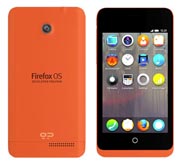 If you’re in the market for a smartphone handset these days, you have two choices when it comes to operating systems – Apple’s iOS, or Google’s Android OS. Well, that’s about to change. A new OS will be coming to the marketplace soon when Mozilla introduces its new Firefox OS for mobile devices.
As Mobile World Congress kicked off in Barcelona, Spain yesterday, the Mozilla Foundation announced the preview of its new Firefox operating system and Firefox Marketplace with partners that include 17 mobile carriers.
The first devices running Firefox OS will be manufactured by Alcatel, LG, and ZTE, and will be debuted only in emerging markets. The devices are scheduled to roll out later this year, and are based on Qualcomm’s Snapdragon mobile processor. They won’t be in the United States for a while – the first wave will be destined for customers in Brazil, Colombia, Hungary, Mexico, Montenegro, Poland, Serbia, Spain, and Venezuela.
Firefox issued the following announcement regarding the new operating system:
“Firefox OS smartphones are the first built entirely to open web standards, enabling every feature to be developed as an HTML5 application. Web apps access every underlying capability of the device, bypassing the typical hindrances of HTML5 on mobile to deliver substantial performance. The platform’s flexibility allows carriers to easily tailor the interface and develop localized services that match the unique needs of their customer base.”
Mozilla is counting that its superior search capabilities and integration with social networks like Facebook and Twitter out of the box will make it very competitive with both iOS and Android.
The operating system is designed to have almost everything a user will need right from the beginning – support for calls, messaging, email, and photographs. It will also offer built-in cost controls and usage tracking, as well as support for location-based services, and the Firefox web browser.
“Every device is better if it’s social, and we’re excited that Firefox OS users will have easy access to the mobile web-based version of Facebook that will take advantage of our current and future features,” explained Vaughan Smith, the Vice President for mobile partnerships at Facebook.
The countries that Firefox is targeting for the OS release are a smart move. They are typically places that don’t have deep penetration or fast adoption rates for Apple’s iOS or Android yet.
By Gilbert Falso :: 5:09 PM
 Pop music star Madonna has been warned by social image sharing site Instagram for posting content that does not abide by its guidelines.
Instagram is asking the 54-year-old singer to refrain from sharing photos “that show nudity or mature content†through the network.Madonna posted the warning that she received on Instagram, and it states that users should not “share photos that show nudity or mature content.†However, the specific letter that Madonna received doesn’t state what particular picture or pictures Madonna shared to prompt the warning she received.
Recent pictures posted on Madonna’s account include a close-up of her cleavage, and a revealing shot of the singer from behind wearing only a leotard.
The letter continues, “we strongly suggest deleting any additional content on your account that may not fall in line with the above guidelines.”
Madonna does not appear to have complied with Instagram’s request yet, and has not offered an official reply to the network or to the press at this time.